Personal Injury Law Blog

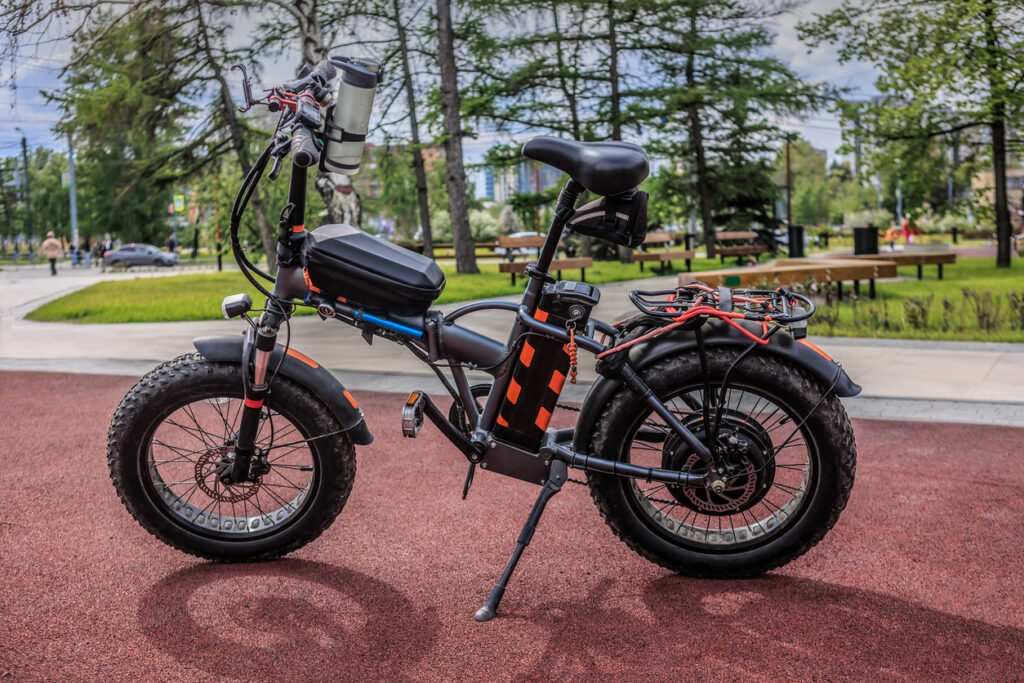 As electric bicycles continue to grow in popularity, so does the conversation surrounding lithium-ion battery safety.
A recent report discussing dozens of reported battery-related incidents involving an e-bike manufacturer, along with additional action by the U.S. Consumer Product Safety Commission (CPSC), serves as another reminder that battery safety remains an evolving public safety issue.
For consumers, stories like these should not create fear.
Instead, they should encourage awareness.
Lithium-ion batteries have transformed transportation by making e-bikes more practical, efficient, and accessible than ever before. Millions of riders safely use these products every day. At the same time, every reported battery fire provides an opportunity to better understand how these incidents occur and what can be done to reduce future injuries.
Electric bicycles have changed the way many people travel.
Across the country, commuters, recreational riders, and delivery workers are turning to e-bikes because they offer:
Advances in lithium-ion battery technology have made these products lighter, more efficient, and capable of traveling longer distances than ever before.
The overwhelming majority of e-bike owners will never experience a battery-related incident.
That is important to remember.
However, as the number of e-bikes on the road continues to increase, so does the importance of ensuring that safety standards evolve alongside the technology.
When a fire involving a lithium-ion battery is reported, investigators work to determine exactly what happened.
That process is important because not every battery failure has the same cause.
Some incidents may involve:
Without a careful investigation, it is impossible to determine why a particular battery failed.
That is why each reported incident provides valuable information that may improve future product safety.
One encouraging aspect of recent developments is the continued involvement of the U.S. Consumer Product Safety Commission.
The CPSC plays an important role in protecting consumers by:
While no regulatory system can eliminate every risk, active oversight helps improve transparency and encourages manufacturers to prioritize safety.
Consumers also benefit because they receive important information regarding potential hazards.
Regulations alone cannot prevent every battery-related incident.
Consumers remain one of the most important participants in battery safety.
Every e-bike owner should understand basic safety practices, including:
These precautions may seem straightforward, but they significantly reduce risk.
Education remains one of the most effective tools available.
Lithium-ion batteries often provide warning signs before a serious failure occurs.
Consumers should stop using a battery immediately if they observe:
Ignoring these warning signs increases the likelihood of serious injury.
Promptly replacing damaged batteries can help prevent more significant incidents.
After a battery fire, many people assume they must have done something wrong.
That is not always the case.
Some investigations reveal issues involving product defects or manufacturing problems that are completely outside a consumer’s control.
Potential issues may include:
Determining whether a battery failure resulted from misuse or from a defective product requires careful technical investigation.
That distinction is important—not only for injured individuals but also for improving future product safety.
If a lithium-ion battery catches fire or explodes, preserving evidence is one of the most important steps an individual can take.
Whenever it is safe to do so, avoid discarding:
These items often provide engineers and fire investigators with valuable information regarding the cause of the failure.
Early preservation frequently makes the difference between obtaining answers and losing critical evidence.
Stories involving battery fires often generate headlines because they are dramatic.
The more important takeaway is that they continue driving conversations about improving battery safety.
Each of these developments contributes to reducing future injuries.
Progress rarely occurs because of one breakthrough.
Instead, it results from continued attention, collaboration, and education.
As attorneys handling lithium-ion battery fire, injury, and wrongful death cases throughout the country, we have seen firsthand the devastating impact battery failures can have on individuals and families.
Our work focuses not only on helping those affected after serious incidents but also on promoting awareness that may help prevent future tragedies.
If you or someone you know has been injured in an e-bike battery fire or explosion, preserving the battery, charger, and damaged bicycle, when it is safe to do so, can be essential to determining what happened. Early investigation often helps identify whether a product defect, manufacturing issue, or other preventable factor contributed to the incident.
Lithium-ion batteries have transformed transportation in remarkable ways, and e-bikes will continue to play an important role in the future of mobility. The goal should never be to discourage innovation. Instead, it should be to encourage safer products, informed consumers, stronger manufacturing standards, and continued public education.
Awareness remains one of the most powerful tools we have. The more consumers understand about battery safety, recalls, warning signs, and proper charging practices, the more opportunities we have to prevent fires, reduce injuries, and protect our communities.

Bruce H. Stern, Esq. Secures $5.5 Million Settlement for Traumatic Brain Injury Victim
Stark & Stark is pleased to announce that Shareholder Bruce H. Stern, Esq., Certified Civil Trial Attorney and member of the firm’s Accident...“Best Law Firms” 2027 List Issued by Best Lawyers Recognizes Stark & Stark PC
We are proud to announce that the firm has been included in the 2027 Edition of Best Lawyers “Best Law Firms®” list, earning 11 regional...Bruce H. Stern, Esq. Secures $950,000 Settlement for Traumatic Brain Injury Client
Stark & Stark is pleased to announce that Shareholder Bruce H. Stern, Esq., Certified Civil Trial Attorney and member of the firm's Accident...Evan J. Lide, Esq. Secures $2.15 Million Wrongful Death Settlement
Stark & Stark is pleased to announce that Shareholder Evan J. Lide, Esq. recently secured a $2,150,000 settlement on behalf of the family of a...Stark & Stark Attorneys Recognized as New Jersey “Super Lawyers” and “Rising Stars” in 2027
Stark & Stark is pleased to announce that 16 of its attorneys have been selected for inclusion in the list of 2027 New Jersey Super Lawyers,...Stark & Stark’s Chinsu Shajan, Esq. Receives Mercer County Bar Association Rising Leader Award
Stark & Stark is proud to announce that Chinsu Shajan, Esq., a Shareholder in the Firm’s Accident & Personal Injury Group, was honored by...