Personal Injury Law Blog

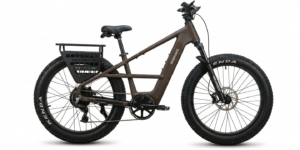
For years, lithium-ion battery fires involving electric bicycles have made headlines across the country. Fire departments have responded to devastating residential fires, families have suffered life-changing injuries, and safety experts have continued to call for stronger protections as e-bike popularity has grown.
Now, a proposed rule by the U.S. Consumer Product Safety Commission (CPSC) could represent one of the most significant steps toward improving e-bike safety in the United States.
According to recent reports, the proposed rule would establish mandatory federal safety requirements for e-bikes, including standards addressing the lithium-ion batteries that power these increasingly popular products.
While the proposal still must complete the regulatory process, it reflects something encouraging: a growing recognition that consumer safety should evolve alongside technology.
E-bikes have become one of the fastest-growing segments of the transportation industry. Consumers are choosing electric bicycles for many reasons, including:
Advances in lithium-ion battery technology have made these products lighter, more efficient, and capable of traveling longer distances than ever before.
For millions of riders, e-bikes have improved daily life.
However, rapid growth also brings new safety challenges.
As more e-bikes enter the marketplace, consistency becomes increasingly important. Consumers should have confidence that the products they purchase meet rigorous safety standards before reaching store shelves.
Historically, not every manufacturer has followed the same testing protocols.
Some products undergo extensive safety testing. Others may rely on lower-quality components or batteries that have not been subjected to comparable evaluations.
Federal safety standards help establish a baseline that benefits everyone. They encourage responsible manufacturing while providing consumers with greater confidence in the products they purchase.
The proposed CPSC rule is particularly important because lithium-ion batteries have become one of the primary areas of concern involving e-bike safety.
Although the overwhelming majority of batteries perform safely, failures can occur. When they do, the consequences can be severe.
Lithium-ion battery failures may result in:
Many of the devastating residential fires reported over the past several years have involved rechargeable batteries powering e-bikes and other mobility devices.
Reducing these incidents requires a combination of better engineering, stronger manufacturing standards, consumer education, and continued innovation.
Some people view regulation as an obstacle to innovation.
In reality, thoughtful safety standards often encourage better innovation.
Manufacturers that invest in high-quality engineering and battery safety benefit when the marketplace rewards safer products.
Consumers benefit because they have greater confidence in what they purchase.
Responsible companies benefit because safety becomes a competitive advantage.
Most importantly, stronger standards have the potential to reduce preventable injuries.
Innovation and safety should never be viewed as competing goals. They should advance together.
Even with stronger product standards, consumer education will continue to play a critical role.
Every e-bike owner should understand basic battery safety practices, including:
Many battery-related incidents can be reduced through these simple precautions.
Awareness remains one of the most effective safety tools available.
When a lithium-ion battery fire occurs, it is easy to assume someone must have charged the battery incorrectly or failed to follow safety recommendations.
That is not always the case.
Some investigations reveal problems involving:
Understanding what caused a battery failure often requires careful investigation by engineers and product experts.
That distinction matters, not only for improving future product safety, but also for protecting consumers whose injuries may have resulted from defective products rather than misuse.
If an e-bike battery fire or explosion occurs, preserving evidence can be critical.
Whenever it is safe to do so, consumers should avoid discarding:
These items frequently become essential evidence when determining the cause of a battery failure.
Prompt documentation and early investigation often make a significant difference.
The proposed CPSC rule reflects a broader shift occurring throughout the lithium-ion battery industry.
Each of these developments contributes to reducing preventable fires.
No single solution will eliminate every battery-related incident. However, progress is made when manufacturers, regulators, researchers, retailers, and consumers work toward the same objective.
The future of e-bikes remains incredibly promising. These products are changing how people commute, exercise, and move through their communities.
The goal should never be to discourage their use.
Instead, the focus should be ensuring that every rider has access to products that meet high safety standards and are supported by continued research, responsible manufacturing, and informed consumer practices.
The proposed CPSC rule represents an important step in that direction.
As attorneys handling lithium-ion battery fire, injury, and wrongful death cases throughout the country, we have seen firsthand how devastating battery failures can be for individuals and families.
Our work begins after tragedy strikes, but our commitment extends much further. We believe education, awareness, and stronger safety standards are among the most effective ways to reduce future injuries.
When manufacturers continue improving product design, regulators establish meaningful safety standards, and consumers understand how to safely use these products, everyone benefits.
If you or someone you know has been injured in an e-bike battery fire or explosion, it is important to preserve the battery, charger, and bicycle whenever possible and seek experienced legal guidance. Determining the cause of a battery failure often requires a thorough investigation, and preserving evidence is one of the most important first steps.
The proposed CPSC rule is more than a regulatory proposal. It is a sign that battery safety is becoming a national priority. That is encouraging news for consumers, manufacturers, and communities alike.
The future of e-bike technology is bright. By pairing innovation with accountability, education, and thoughtful safety standards, we can continue to enjoy the benefits of rechargeable transportation while reducing preventable fires and protecting lives.
Source:
Electrek – New CPSC Rule Could Dramatically Change E-Bikes in the U.S.

Stark & Stark Recognized with Community Partner Award by Mercer County Community College Foundation
Stark & Stark is proud to announce that the firm has been recognized with the Community Partner Award by the Mercer County Community College...Carin A. O’Donnell, Esq. Inducted as 2026-2027 President of the Pennsylvania Association for Justice
Stark & Stark is proud to announce that Carin A. O'Donnell, Esq. was sworn in as the 2026-2027 President of the Pennsylvania Association for...Stark & Stark’s Thomas S. Onder, Esq. Receives 2026 ICSC Trustees’ Distinguished Service Award
Stark & Stark is proud to announce that Thomas S. Onder, Esq., Shareholder and Chair of the Firm’s Shopping Center & Retail Development...Our Values Remain: A Message on the Closing of Diversity Lab
Stark & Stark is saddened and disappointed to learn that Diversity Lab, the organization that created and manages the Mansfield Certification...Retail Development Team Secures Major Recovery for Landlord Client Amid Bankruptcy Dispute
Our Shopping Center and Retail Development Group recently secured a multi-million-dollar settlement for a commercial landlord client' s property...