Personal Injury Law Blog

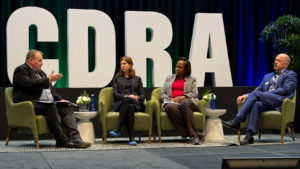
When multiple national organizations representing the recycling, waste management, and environmental services industries come together to address a single issue, it sends an important message.
That is exactly what is happening as the Construction & Demolition Recycling Association (CDRA), National Waste & Recycling Association (NWRA), Recycled Materials Association (ReMA), and Solid Waste Association of North America (SWANA) announced a joint safety meeting dedicated to one growing concern: lithium-ion battery fires.
This type of collaboration is encouraging.
For years, lithium-ion batteries have transformed the way we live, work, and travel. They power our smartphones, laptops, cordless tools, electric vehicles, e-bikes, scooters, medical equipment, and countless other products that have become part of our everyday lives.
The benefits of this technology are undeniable.
At the same time, the rapid growth in rechargeable battery use has created new challenges that extend far beyond individual consumers. Fire departments, manufacturers, transportation companies, recycling facilities, waste management organizations, researchers, regulators, and legal professionals are all confronting the same reality: lithium-ion battery fires have become an increasingly significant public safety concern.
The fact that multiple national organizations are joining forces to discuss solutions demonstrates just how important this issue has become.
Lithium-ion batteries have revolutionized modern technology.
Their ability to store large amounts of energy while remaining lightweight has fueled innovation across nearly every industry.
Today, lithium-ion batteries power:
For millions of people, these products improve convenience, productivity, mobility, and quality of life.
Most consumers will never experience a battery-related incident.
That is important to remember.
However, as more battery-powered products enter homes, businesses, warehouses, recycling facilities, and transportation networks, the total number of battery failures has also increased.
The challenge now is ensuring that safety keeps pace with innovation.
Many people associate lithium-ion battery fires with e-bikes or consumer electronics.
In reality, recycling facilities and waste operations have become some of the most vulnerable environments for battery-related fires.
Improperly discarded batteries often end up mixed with recyclable materials or household waste. As those materials are sorted, crushed, compacted, or transported, batteries can become damaged.
That damage may trigger an internal short circuit and ultimately thermal runaway—a rapid chain reaction capable of producing intense heat, fire, and explosions.
A single damaged battery can ignite surrounding combustible materials, creating fires that spread quickly and require significant emergency response resources.
For workers in recycling facilities and waste processing centers, these incidents present daily operational risks.
That is one reason why organizations representing these industries are investing more time and resources into education and prevention.
One of the most encouraging aspects of the upcoming safety meeting is its emphasis on awareness. Education remains one of the most effective ways to reduce battery-related incidents.
Consumers often have no idea that throwing a rechargeable battery into household trash can create serious hazards.
Similarly, many people do not recognize the warning signs of battery failure, such as:
Recognizing these signs, and responding appropriately, can prevent injuries before they occur.
Likewise, understanding how to safely dispose of batteries can significantly reduce fires at recycling facilities.
Awareness truly benefits everyone.
Reducing lithium-ion battery fires requires cooperation across multiple industries.
No single group can solve this issue alone.
Safety improves when every participant in the battery lifecycle plays a role.
The answer to increasing battery fires is not abandoning rechargeable technology. Quite the opposite.
Lithium-ion batteries have helped create cleaner transportation, more efficient workplaces, improved medical devices, and innovative consumer products.
Continued investment in battery research is essential.
Scientists and engineers are actively developing:
Every advancement has the potential to reduce fires while preserving the enormous benefits these batteries provide.
Innovation and safety should always move forward together.
While education plays a vital role, it is equally important to recognize that not every battery fire results from improper use.
Some investigations reveal:
When those defects lead to fires, consumers should not bear the consequences alone.
Careful investigation often determines whether a battery failure was preventable and whether a product defect contributed to the incident.
That investigation begins with preserving evidence whenever possible.
Statistics often dominate discussions about lithium-ion battery fires. Yet behind every statistic is a person whose life may have changed forever.
Battery-related incidents have resulted in:
Families often face months or years of recovery while trying to understand what caused the incident.
That reality should continue motivating efforts toward education, research, and safer products.
The upcoming collaboration among CDRA, NWRA, ReMA, and SWANA represents something much larger than a single safety meeting.
It reflects growing recognition that lithium-ion battery safety deserves national attention.
That recognition is encouraging.
The more industries collaborate, the more opportunities exist to improve product design, expand public education, strengthen recycling practices, and reduce preventable fires.
Progress happens when organizations share information rather than work in isolation.
As attorneys handling lithium-ion battery fire, injury, and wrongful death cases throughout the country, we have seen firsthand how devastating these incidents can be for individuals and families.
While many battery fires can be prevented through education and safe handling, others result from defective products that should never have reached consumers.
Our work extends beyond representing those affected after tragedy strikes. We are equally committed to promoting awareness, supporting advances in battery safety, and encouraging conversations that help prevent future injuries.
If you or someone you know has been injured in a lithium-ion battery fire or explosion, preserving the battery, charger, and damaged product—when it is safe to do so—can be critical to determining what happened. An early investigation often provides answers that may not only protect your legal rights but also help identify safety issues that prevent similar incidents from affecting others.
The announcement of this national safety meeting is a reminder that awareness is growing—and that is good news. When manufacturers, researchers, industry leaders, public agencies, and consumers all commit to improving battery safety, everyone benefits.
Awareness creates education. Education creates prevention. And prevention has the power to save lives.
Source: Waste Today – Industry Groups Announce Joint Lithium-Ion Battery Safety Meeting

Stark & Stark Recognized with Community Partner Award by Mercer County Community College Foundation
Stark & Stark is proud to announce that the firm has been recognized with the Community Partner Award by the Mercer County Community College...Carin A. O’Donnell, Esq. Inducted as 2026-2027 President of the Pennsylvania Association for Justice
Stark & Stark is proud to announce that Carin A. O'Donnell, Esq. was sworn in as the 2026-2027 President of the Pennsylvania Association for...Stark & Stark’s Thomas S. Onder, Esq. Receives 2026 ICSC Trustees’ Distinguished Service Award
Stark & Stark is proud to announce that Thomas S. Onder, Esq., Shareholder and Chair of the Firm’s Shopping Center & Retail Development...Our Values Remain: A Message on the Closing of Diversity Lab
Stark & Stark is saddened and disappointed to learn that Diversity Lab, the organization that created and manages the Mansfield Certification...Retail Development Team Secures Major Recovery for Landlord Client Amid Bankruptcy Dispute
Our Shopping Center and Retail Development Group recently secured a multi-million-dollar settlement for a commercial landlord client' s property...