Business & Commercial Law Blog

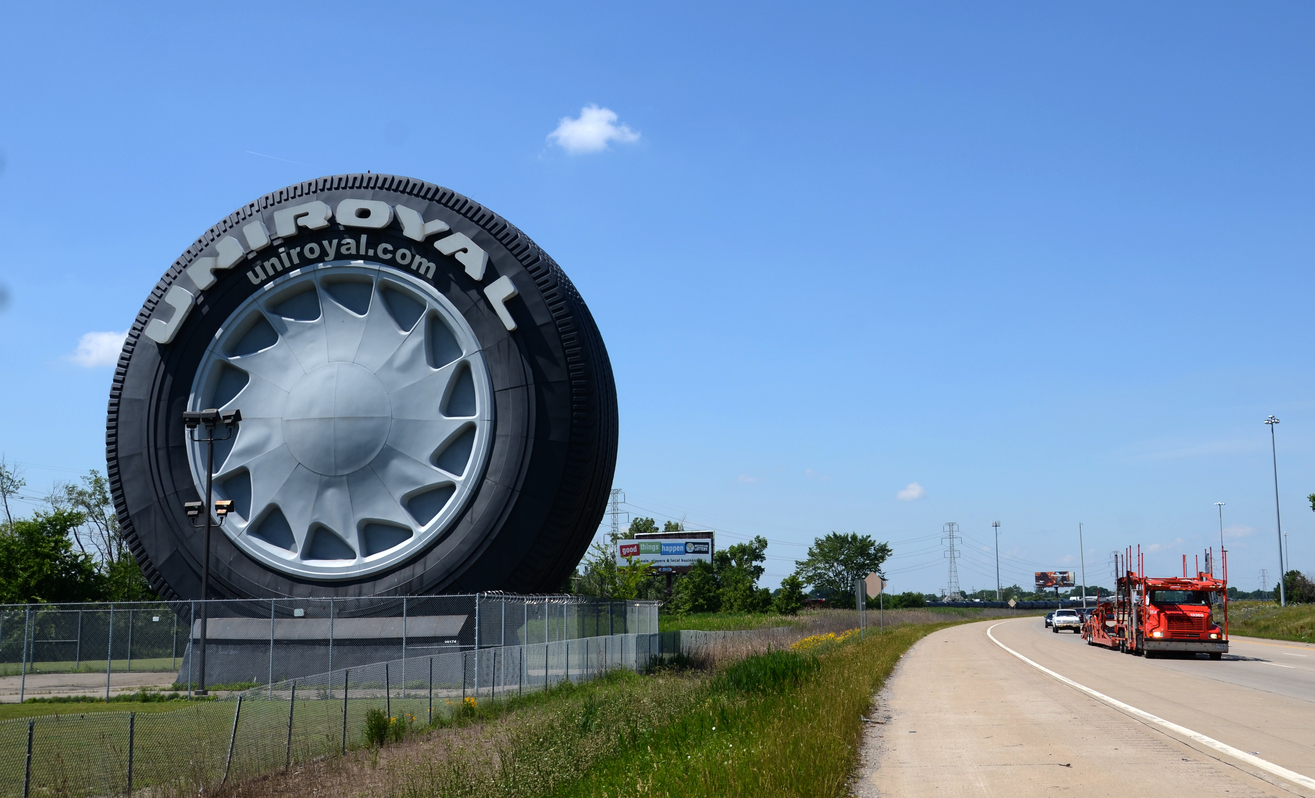
On July 31, 2026, Uniroyal Holding, Inc. and its wholly owned subsidiary, Great Hill Corporation, filed voluntary Chapter 11 petitions in the U.S. Bankruptcy Court for the District of New Jersey, Trenton Vicinage, before the Honorable Michael B. Kaplan (Case No. 26-18668-MBK). For Plaintiffs’ counsel and those who practice in the Third Circuit and follow asbestos-driven Chapter 11s, this filing is worth a close read — not because it involves a struggling operating company, but because it doesn’t. Uniroyal has had no operating business for over three decades. It exists solely to run out the clock on a decades-old asbestos liability and a shrinking retiree benefits program. This case appears designed from day one as a consensual, pre-negotiated liquidating plan rather than a reorganization.
Uniroyal Holding traces its roots to the old “United States Rubber Company,” organized in New Jersey in 1892 and later rebranded Uniroyal in the 1960s. Uniroyal Holding, Inc. was formed in 1985, and it took on two narrow responsibilities: administering post-employment retiree medical and life insurance benefits and managing personal-injury/wrongful-death (“PI/WD”) claims tied to a lightweight asbestos-containing cloth manufactured for the U.S. Navy during World War II.
According to the First Day Declaration of Robert V. D’Angelo, Jr., the company is filing now because of its handful of remaining employees, who range in age from 69 to 73 and have decades of institutional knowledge, are ready to retire. Rather than let an unmanaged runoff occur, Uniroyal spent months negotiating. Since Uniroyal assumed the liability in 1985, more than 516,000 PI/WD claims have been filed against it, of which approximately 217,000 have been resolved for payments totaling just under $500 million, another 264,000 were dismissed without payment, and more than 35,000 claims remain pending as of the petition date.
Consistent with the case’s asbestos-mass-tort profile, the Debtors’ first-day filings identify the law firms representing the largest numbers of PI/WD claimants in lieu of a traditional 20-largest-unsecured-creditors list. Weitz & Luxenberg is listed as the largest plaintiffs’ firm, representing more than 22,000 pending cases against the Debtors.
This appears to be a fully negotiated, consensual case. Before filing, Uniroyal negotiated with the Ad Hoc Group (represented by Brown Rudnick LLP and Province LLC) and executed an RSA under which the Ad Hoc Group and its clients agreed to support and vote for the Debtors’ proposed Joint Chapter 11 Plan. The Plan’s core structure: pay all non-asbestos claims in full, establish a settlement trust to assume and resolve all present and future PI/WD claims, and then dissolve the corporate entities entirely. This is a classic 524(g)-style asbestos funneling trust, adapted here to a company with no-going-concern operations to preserve.
A secondary interesting component of this case involves roughly 140 remaining retirees (average age 92) still receiving medical and life insurance benefits under a program Uniroyal has managed since 1985. Unable to find a third party willing to assume the benefits program on comparable terms, Uniroyal worked with Mercer Health & Benefits to solicit bids and structure a replacement arrangement. Modifications to that program remain subject to Bankruptcy Court approval, and Uniroyal intends to seek appointment of an official retiree committee.
Firms with pending or anticipated PI/WD claims against Uniroyal, especially those outside the Ad Hoc Group, should closely monitor the docket for the bar date order, proposed trust distribution procedures (TDPs), and the disclosure statement/confirmation hearing schedule, and be prepared to timely file proofs of claim or objections to protect clients’ recoveries. Because the Ad Hoc Group already represents roughly 88% of known claimants and pre-negotiated the RSA and Plan terms, non-signatory firms should review those documents promptly . Counsel should also track whether an official PI/WD claimants’ committee or future claimants’ representative is appointed and separately note that the retiree benefits modification is proceeding on its own track through the Retiree Ad Hoc Group.
With its headquarters in the Trenton area, Stark & Stark brings decades of experience representing creditors in sophisticated Chapter 11 and asbestos-related bankruptcy matters before the District of New Jersey. If your firm needs experienced local bankruptcy counsel to monitor this case, protect claim positions, or navigate the trust claims process, we welcome the opportunity to assist.

Stark & Stark Recognized with Community Partner Award by Mercer County Community College Foundation
Stark & Stark is proud to announce that the firm has been recognized with the Community Partner Award by the Mercer County Community College...Carin A. O’Donnell, Esq. Inducted as 2026-2027 President of the Pennsylvania Association for Justice
Stark & Stark is proud to announce that Carin A. O'Donnell, Esq. was sworn in as the 2026-2027 President of the Pennsylvania Association for...Stark & Stark’s Thomas S. Onder, Esq. Receives 2026 ICSC Trustees’ Distinguished Service Award
Stark & Stark is proud to announce that Thomas S. Onder, Esq., Shareholder and Chair of the Firm’s Shopping Center & Retail Development...Our Values Remain: A Message on the Closing of Diversity Lab
Stark & Stark is saddened and disappointed to learn that Diversity Lab, the organization that created and manages the Mansfield Certification...Retail Development Team Secures Major Recovery for Landlord Client Amid Bankruptcy Dispute
Our Shopping Center and Retail Development Group recently secured a multi-million-dollar settlement for a commercial landlord client' s property...