Business & Commercial Law Blog

Artificial intelligence can now compose music, generate paintings and photographs, draft books and screenplays, and write computer programs in seconds. That speed has created an understandable temptation to treat the legal issues as equally binary: either everything produced by AI belongs to the user, or every system trained on copyrighted material is unlawful. Current copyright law, however, supports neither conclusion. 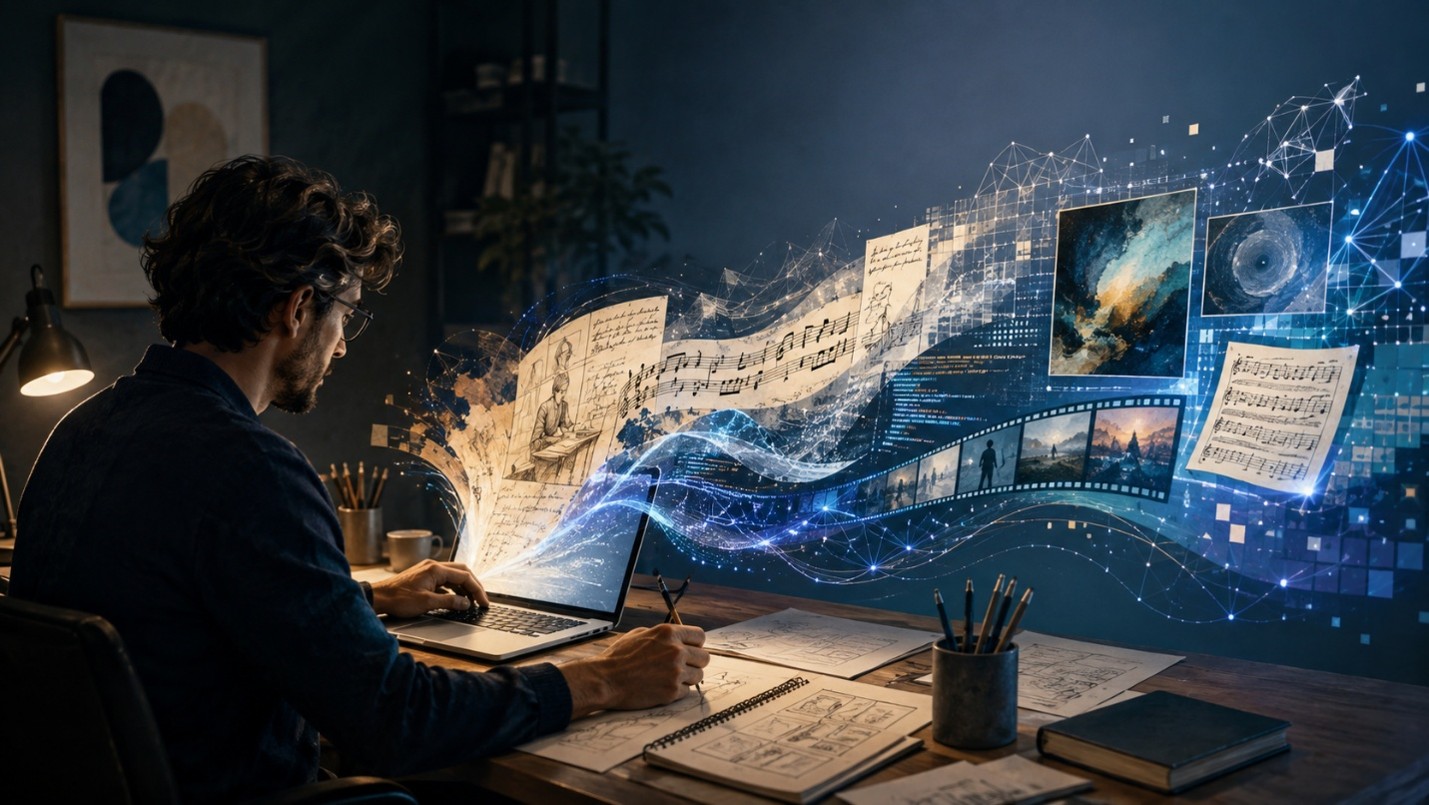
The more accurate answer is that copyright follows human authorship, while infringement turns on what was copied, how it was obtained, how it was used, what the system produces, and whether the use harms an existing or reasonably likely market. Those are fact-intensive questions. Recent decisions have begun to draw the lines, but the appellate courts have not yet supplied a comprehensive framework for generative AI.
 Under the Copyright Act, protection extends to “original works of authorship” fixed in a tangible medium. 17 U.S.C. § 102(a). The phrase has long been understood to require a human author. In Thaler v. Perlmutter, 130 F.4th 1039 (D.C. Cir. 2025), the D.C. Circuit affirmed the Copyright Office’s refusal to register an image identified as having been created autonomously by a computer system called the Creativity Machine. The applicant listed the machine as the sole author and sought ownership as the machine’s owner. The court held that the Copyright Act requires a work to be authored in the first instance by a human being. The Supreme Court denied review on March 2, 2026, leaving that holding intact.
Thaler answers the easiest version of the question: a machine cannot be the author, and a purely machine-generated work is not copyrightable. It does not mean that every work made with AI assistance is unprotected. Cameras, word processors, digital editing programs, and other tools do not disqualify human expression, and neither does AI merely because it participated in the process.
The Copyright Office’s January 2025 report, Copyright and Artificial Intelligence, Part 2: Copyrightability, applies that same distinction. A human author may obtain protection for original expression the person contributes to an AI-assisted work, including creative selection, coordination, arrangement, modification, or the use of human-authored material that remains perceptible in the final work. Protection, however, extends only to the human-authored elements, not to material generated by the system without sufficient human control.
Prompts present the difficult middle. The Copyright Office concluded that, with generally available technology, prompts alone are unlikely to establish authorship of the output. A prompt may be detailed and may itself contain copyrightable expression, but it ordinarily operates as an instruction: the system determines many of the final expressive details, and identical prompts may generate materially different results. Repeated prompting also does not necessarily solve the problem. Copyright rewards authorship, not effort or “sweat of the brow.” This analysis may change as tools give users more direct and predictable control over expressive elements.
The current registration cases and agency decisions sharpen the human-authorship rule. They also expose the line that Thaler did not decide – how much human control over an AI-assisted output is enough. Thaler involved a work identified as autonomously created by a machine. The D.C. Circuit expressly declined to decide the harder case in which a human claims authorship using AI as a tool.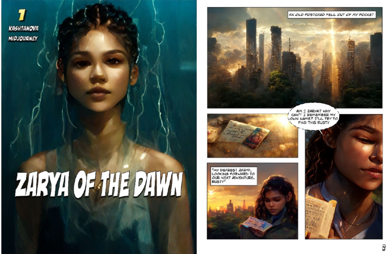
The Copyright Office first confronted a mixed human-and-AI work in Zarya of the Dawn (Feb. 21, 2023), a graphic novel containing human-written text and Midjourney-generated images. The Office maintained registration for the author’s text and for her creative selection, coordination, and arrangement of the text and images, but excluded the individual AI-generated images. The decision illustrates that a work may be registrable as a whole even though some constituent elements receive no protection.
 The Office reached the opposite result for the claimed images in Théâtre D’opéra Spatial (Sept. 5, 2023) and SURYAST (Dec. 11, 2023). Jason Allen used more than 600 prompts to create Théâtre D’opéra Spatial with Midjourney and made additional edits, but refused to disclaim the Midjourney-generated material. The Review Board therefore affirmed refusal of the claim as submitted, while recognizing that Allen could seek registration limited to his human-authored modifications.
In SURYAST, Ankit Sahni supplied his own photograph and a style image to the RAGHAV Artificial Painting App. The Board concluded that Sahni authored the original photograph, but not the expressive elements added by RAGHAV to produce the claimed derivative image.
Those administrative rulings are now being tested in court. Allen v. Perlmutter, No. 1:24-cv-02665-WJM (D. Colo.), asks whether iterative prompting and post-generation edits can amount to human authorship of the resulting image; the parties’ summary-judgment motions remain pending. Suryast U.S. Enterprises LLC v. Perlmutter, No. 2:26-cv-04999 (C.D. Cal., filed May 8, 2026), challenges the SURYAST refusal. Unlike Thaler, these cases directly present the unresolved boundary between using AI as a tool and allowing the system to determine the work’s expressive elements.
As of August 12, 2026, no reported federal decision has established a different registration rule for AI-generated text, music, sound recordings, screenplays, or software. The Office applies the same medium-neutral inquiry: identify the expression created by a human. Thus, human-written lyrics, melody, dialogue, prose, or code may be claimed; AI-generated accompaniment, vocals, passages, images, or code must be excluded unless the applicant can show that a human determined those expressive elements. Human selection and arrangement of AI material may support a compilation copyright, but that protection is “thin” and does not create exclusive rights in the unprotectable AI components themselves.
The Office’s disclosure rule is more concrete than the phrase “more than de minimis” may suggest. Disclosure is generally required when the AI-generated material would itself be copyrightable if a human had created it, what the Office calls an “appreciable” amount. Routine AI assistance, such as brainstorming, spell-checking, sharpening an image, or making a trivial color adjustment, ordinarily need not be disclosed. If the boundary is uncertain, the applicant should provide a general disclosure and permit the examiner to determine the proper limitation of the claim. As of May 2026, the Office reported registering more than 7,000 claims containing disclosed and disclaimed AI-generated material.
The practical lesson is to preserve the human creative record. A novelist who uses AI to brainstorm but writes and revises the prose, an artist who materially alters generated elements and arranges them into a larger composition, or a programmer who uses an AI suggestion as one component of independently written and organized code may have protectable authorship. A person who merely asks for “a pop song about summer” and accepts the first output likely does not.
Training usually requires making copies. That may implicate the copyright owner’s reproduction right even if the public never sees the training copy. The central defense is fair use under 17 U.S.C. § 107, which examines: (1) the purpose and character of the use; (2) the nature of the copyrighted work; (3) the amount and substantiality used; and (4) the effect on the potential market for or value of the work. The factors are balanced together on a case-by-case basis.
The source of the training material matters. So does the purpose of the model, the relationship between the model and the market for the copyright owner’s work, the likelihood of memorization or regurgitation, and the existence of safeguards. A system used to analyze scientific literature may present a different fair-use case from a commercial image or music generator designed to produce substitutes in the same market as the works on which it trained.
The Supreme Court’s decision in Andy Warhol Foundation for the Visual Arts, Inc. v. Goldsmith, 598 U.S. 508 (2023), supplies the framework now influencing AI cases. Photographer Lynn Goldsmith licensed her photograph of Prince to Vanity Fair for one use as an artist reference. Andy Warhol created a Prince image from the photograph and later created a series. After Prince’s death, the Warhol Foundation licensed “Orange Prince” to Condé Nast for a commemorative magazine while Goldsmith also licensed photographs of Prince for that same market.
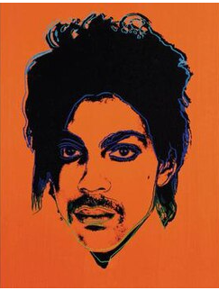 The Supreme Court addressed only the Foundation’s later commercial licensing and held that the first fair-use factor favored Goldsmith. Although Warhol added new expression, meaning, and message, both uses served a substantially similar commercial purpose: supplying an image of Prince to a magazine. The Court cautioned that “transformative” cannot be applied so broadly that it swallows the copyright owner’s exclusive right to prepare and license derivative works.
Warhol is important to AI for two reasons. First, a new aesthetic or technological process does not, by itself, establish fair use. Courts compare the specific challenged uses. Second, commercial competition and licensing markets matter. An AI developer may characterize training as statistical learning, while a rights holder may focus on a model’s ability to flood the same market with inexpensive substitute works. Both characterizations may be relevant, and the evidentiary record will often determine which one carries greater weight.
In Thomson Reuters Enterprise Centre GmbH v. ROSS Intelligence Inc., No. 1:20-cv-613-SB (D. Del. Feb. 11, 2025), the District of Delaware issued the first substantive United States decision rejecting fair use for AI-related training. ROSS sought to build a legal-research platform that would compete with Westlaw. After Thomson Reuters declined to license Westlaw content, ROSS obtained “Bulk Memos” created by LegalEase. The memos contained legal questions and good and bad answers developed with reference to Westlaw headnotes.
The court held that Westlaw’s headnotes satisfied copyright’s low originality threshold and found actual copying and substantial similarity as to a defined group of headnotes. On fair use, two factors favored each side, but the court gave greater weight to the first and fourth factors. ROSS’s use was commercial and, in the court’s view, not transformative because it used the headnotes to develop a product intended to compete with Westlaw. The court also found harm to the market for legal-research platforms and to a potential market for licensing data for AI training.
The court relied on Warhol’s instruction to examine the specific purpose of the challenged use and rejected ROSS’s analogy to cases permitting intermediate copying of computer code. In those cases, copying facilitated a new and different product or interoperability; here, the court found that ROSS used the material to create a direct competitive substitute. The court was careful to note that ROSS was not generative AI: its system returned existing judicial opinions rather than generating new expressive works.
That limitation is significant. ROSS does not establish that all AI training infringes, but it demonstrates that the words “AI training” do not create a special fair-use exemption. The Third Circuit accepted an interlocutory appeal and heard argument on June 11, 2026. Its decision may become the first federal appellate ruling squarely addressing fair use in AI training and is one of the most important cases to watch.
Two Northern District of California decisions reached results more favorable to generative-AI developers, while emphasizing different limits.
In Bartz v. Anthropic PBC, No. 3:24-cv-05417-WHA (N.D. Cal. June 23, 2025), authors alleged that Anthropic copied books to train large language models and assembled a central digital library containing millions of books. Judge William Alsup held that the use of books to train the models was highly transformative and fair use on the record before him. He also held that converting lawfully purchased print books into digital copies for an internal library was fair use where each print copy was destroyed and replaced with a digital copy.
The result was different for books Anthropic downloaded from pirate “shadow libraries.” The court treated acquisition and retention of those copies as a separate use and refused to excuse it merely because some copies might later be used for lawful training. That claim proceeded toward trial and ultimately produced a $1.5 billion class settlement, which received final approval on July 20, 2026. The settlement resolved the piracy claims without erasing the court’s fair-use ruling concerning training.
Two days after Bartz, Judge Vince Chhabria granted summary judgment to Meta in Kadrey v. Meta Platforms, Inc., No. 3:23-cv-03417-VC (N.D. Cal. June 25, 2025). The court held that Meta’s use of the plaintiffs’ books to train its Llama models was transformative and that the plaintiffs had not adduced evidence sufficient to show cognizable market harm. But the opinion was no blanket endorsement. Judge Chhabria explained that generative AI may create unprecedented market dilution by enabling an enormous volume of works that compete with human authors. The plaintiffs lost because they failed to present the required evidence and arguments to prove that theory in their case.
Bartz and Kadrey therefore converge on a narrow point: training a generative model can be transformative. They do not establish that all training is fair. They differ in their treatment of sourcing and market harm, and both turn on the records presented. Bartz’s piracy distinction and Kadrey’s market-dilution warning may prove at least as consequential as their ultimate holdings for AI developers.
Even if training qualifies as fair use, a particular output may still infringe. Copyright does not protect ideas, facts, general themes, or artistic “style” standing alone. Liability ordinarily requires copying protected expression and substantial similarity between the accused output and the copyrighted work. Exact or near-exact “regurgitation” presents the clearest risk; a derivative work that recasts protected characters, lyrics, images, code, or other expression can also create liability.
Early pleading decisions are illustrative. In Tremblay v. OpenAI, Inc., 716 F. Supp. 3d 772 (N.D. Cal. 2024), and an earlier order in Kadrey, claims based on allegedly infringing outputs were dismissed where the authors did not identify outputs substantially similar to their books. In Andersen v. Stability AI Ltd., 744 F. Supp. 3d 956 (N.D. Cal. 2024), by contrast, the court allowed core claims by visual artists to proceed into discovery and declined to resolve fair use on the pleadings. The technical operation of the models and evidence connecting training data to outputs remain central issues in the litigation.
The distinction between inputs and outputs is essential. A plaintiff may challenge the making or acquisition of training copies without proving that the model reproduces the work for users. A separate output claim generally requires comparison of the resulting work to protectable expression in the original.
The field is now developing across media, technology, and legal theories:
The New York Times Co. v. Microsoft Corp. No. 1:23-cv-11195-SHS (S.D.N.Y. Mar. 26, 2025) case and the consolidated newspaper and author actions against OpenAI and Microsoft in the Southern District of New York place both training inputs and allegedly substitutive or regurgitated outputs at issue. In March 2025, the court allowed the principal copyright claims to proceed while dismissing several ancillary claims. The eventual fair-use record may test whether current-news products and paywalled archives receive different treatment from books used for general-purpose training.
Andersen v. Stability AI and Getty Images (US), Inc. v. Stability AI, Inc. address image models, training datasets, outputs, copyright-management information, and trademarked watermarks. Getty dismissed its Delaware action in 2025 and refiled in the Northern District of California. These cases may illuminate whether image generation creates different markets and substantial-similarity concerns than text models.
Doe v. GitHub, Inc. No. 3:22-cv-06823-JST (N.D. Cal.), interlocutory appeal, No. 24-6849 (9th Cir., argued Feb. 11, 2026) concerns GitHub Copilot and alleged removal or alteration of copyright-management information from computer code under Section 1202 of the Digital Millennium Copyright Act. Most claims were narrowed or dismissed, and the Ninth Circuit heard argument in February 2026 on the scope of Section 1202. The decision may affect whether plaintiffs must identify an identical copy bearing removed copyright information, an issue with implications beyond software.
The music cases against Suno and Udio challenge the alleged copying of sound recordings for training and the generation of music that may imitate protected recordings or lyrics. Some label claims have moved toward settlements and licensing arrangements, but remaining disputes, and a July 2026 German ruling against Suno under a different legal regime, show that music may develop its own answers based on licensing practices, access controls, and output similarity.
Thomson Reuters v. ROSS remains the immediate appellate case to watch. The Third Circuit’s treatment of Warhol, intermediate copying, competition, and training-data licensing could influence courts nationwide even though ROSS involved non-generative legal research.
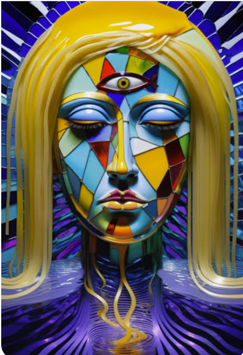 Recent developments further illustrate that copyright protection for AI-assisted works is not necessarily an all-or-nothing proposition. In January 2025, the Copyright Office registered A Single Piece of American Cheese, but expressly excluded its AI-generated image components. The registration instead covered the human selection, coordination, and arrangement of those components. The decision demonstrates that a creator may obtain a relatively narrow copyright in the manner in which AI-generated elements are selected and assembled, even though the individual elements remain unprotected. Correspondingly, infringement will depend on whether the defendant copied that protectable human contribution, not merely whether the defendant copied some portion of the finished image.
The developing authorities also distinguish manual authorship from iterative prompting. Repeated prompts, even hundreds of them, may demonstrate substantial effort and creative intention without establishing that the user determined the output’s expressive details. A stronger claim arises when the creator directly edits, redraws, crops, masks, positions, combines, or otherwise controls identifiable elements of the finished work. Creators using AI should therefore preserve prompts, drafts, source files, editing layers, intermediate outputs, and other evidence identifying precisely what the human author contributed.
The Copyright Office’s May 2025 pre-publication report, Copyright and Artificial Intelligence, Part 3: Generative AI Training, rejected a categorical answer. It concluded that multiple stages of AI development may implicate copyright owners’ exclusive rights and that fair use depends on the works used, their source, the purpose of the use, and controls on outputs. Uses for analysis or research may be less likely to substitute for expressive works. Commercial use of vast quantities of copyrighted expression to produce competing content, especially through illegal access, may exceed established fair-use boundaries.
The Copyright Office recommended allowing voluntary licensing markets to develop before imposing a compulsory federal licensing scheme. That recommendation describes the market already emerging in publishing, news, music, images, and specialized data. It also reinforces a practical point: the absence of a definitive court ruling does not make licensing irrelevant. A negotiated license can allocate rights, warranties, attribution, compensation, data security, output restrictions, and responsibility for infringement more predictably than litigation.
For creators, businesses, and AI developers, the safest course is not to wait for a case law to answer every question:
Document human authorship. Preserve drafts, edits, source files, versions, prompts, and the specific human decisions that determine the final expressive elements.
Treat inputs and outputs separately. Confirm the source and license status of training, retrieval, or reference material, and independently review outputs for protected text, images, characters, music, code, and copyright-management information.
Do not assume public availability means permission. Content posted online may remain copyrighted, and material obtained from a pirate source presents a materially worse fair-use case.
Address ownership by contract. Agreements with employees, contractors, vendors, and AI providers should allocate ownership of human contributions, identify permitted training uses, require appropriate disclosures, and address indemnification and defense obligations.
Register the human-authored work accurately. Applicants should disclose AI-generated material and claim only the protectable human contribution. Early registration remains important to later remedies for infringement.
Evaluate market substitution. The closer the system or output comes to replacing the original work, its derivatives, or an established licensing market, the greater the risk under Warhol and the fourth fair-use factor.
The emerging rule is not that AI receives copyright protection, nor that every unlicensed training use is infringement. It is that copyright remains centered on human creativity and specific uses. Pure AI output has no copyright author. Human expression incorporated into or layered around AI material may be protected. Training may be fair when it serves a genuinely different purpose and does not improperly invade the owner’s markets, but piracy, direct competition, regurgitation, and substitutive outputs can change the analysis.
For now, businesses should view provenance, human control, output review, and licensing as core components of an AI intellectual-property policy as the courts continue to provide guideposts.

Stark & Stark Recognized with Community Partner Award by Mercer County Community College Foundation
Stark & Stark is proud to announce that the firm has been recognized with the Community Partner Award by the Mercer County Community College...Carin A. O’Donnell, Esq. Inducted as 2026-2027 President of the Pennsylvania Association for Justice
Stark & Stark is proud to announce that Carin A. O'Donnell, Esq. was sworn in as the 2026-2027 President of the Pennsylvania Association for...Stark & Stark’s Thomas S. Onder, Esq. Receives 2026 ICSC Trustees’ Distinguished Service Award
Stark & Stark is proud to announce that Thomas S. Onder, Esq., Shareholder and Chair of the Firm’s Shopping Center & Retail Development...Our Values Remain: A Message on the Closing of Diversity Lab
Stark & Stark is saddened and disappointed to learn that Diversity Lab, the organization that created and manages the Mansfield Certification...Retail Development Team Secures Major Recovery for Landlord Client Amid Bankruptcy Dispute
Our Shopping Center and Retail Development Group recently secured a multi-million-dollar settlement for a commercial landlord client' s property...