Business & Commercial Law Blog

 To no surprise, the Garden State has a Right to Farm Act which was adopted to help address conflicts between farmers, neighbors, and municipalities regarding a farm’s operations.
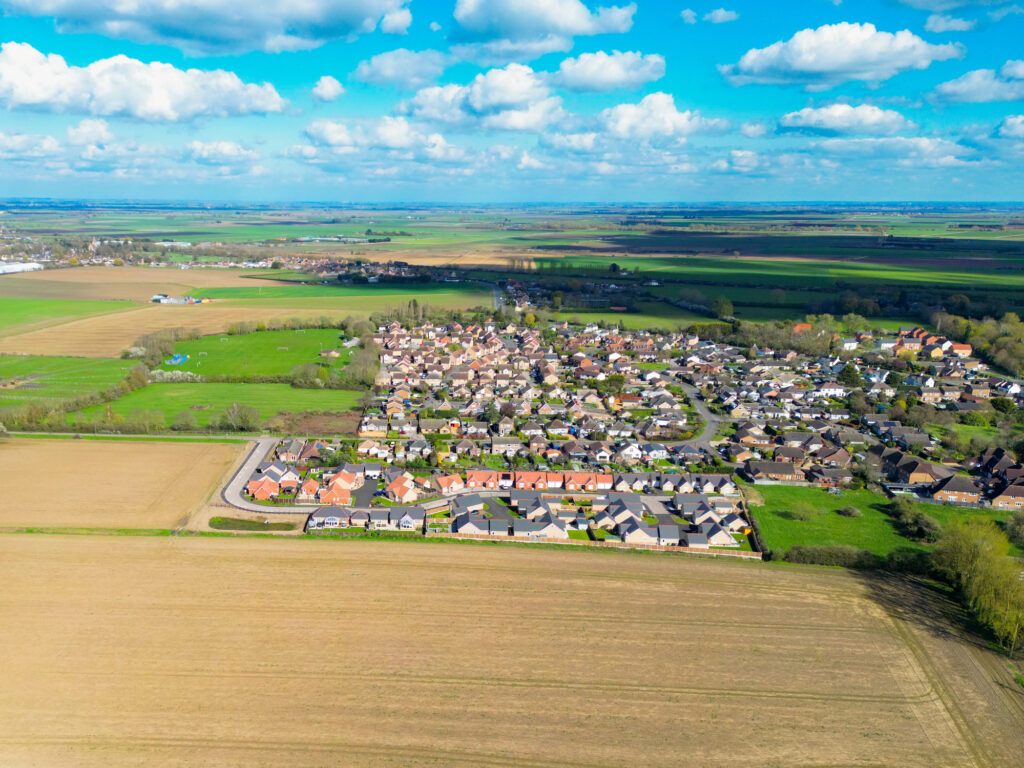
Since New Jersey is a very densely populated state, many farmers have found themselves as close neighbors to homeowners, which has caused both farmers and the public to seek redress before either a local country agricultural board or the State Agriculture Development Committee (SADC).
This article is the first of a three-part series discussing the New Jersey Right to Farm Act. Part One is an overview of the law, Part Two addresses the eligibility requirements to appear for a County Agricultural Development Board (CADB) or SADC, and Part Three discusses certain specific disputes that often appear before a CADB or SADC.
The Right to Farm Act (N.J.S.A. 4:1C-1 et seq.) is a law in New Jersey adopted by the legislature which sets forth the framework for handling disputes involving commercial farms.
Each County in New Jersey can establish a CADB or opt to have the SADC handle the disputes. As of today, 18 of 21 Counties have CADBs (Essex, Hudson and Union Counties do not have a CADB).
To bring an issue before a CADB or SADC, a farmer, property owner or municipality must file a formal complaint with the CADB or SADC. In Part Two of this series we discuss the eligibility requirements for a Right to Farm action since not all disputes fall within the jurisdiction of a CADB or SADC.
If a commercial farm meets the eligibility requirements under the Right to Farm Act, the farm and farmer can receive significant protection against nuisance lawsuits and overly restrictive local land use regulations of a farm.
But it is not a “home game” for the farmer or a system that is designed to rubber stamp whatever a farmer wants. The CADB and SADC must not only consider the actions of the farmer but must also consider the interests of all other parties, including any applicable land use restrictions and public health and safety issues.
The Right to Farm Act has two main options to resolve an issue – one where a neighbor or municipality files a complaint and a second where the farmer files a complaint. As discussed in Part Three, neighbor disputes often concern nuisance or trespass claims (noise and odor complaints or flooding), and municipal disputes often arise from alleged zoning violations. Note that a farmer can file its own complaint seeking an affirmative determination that its actions are protected under the Right to Farm Act, often used when an issue is brewing and a farmer wants an affirmative finding his or her actions conform to generally accepted farming practices.
When there is a dispute over whether the CADB or Court should hear a matter, the CADB is entitled to make the initial decision on who should hear the dispute (commonly referred to as jurisdiction). For example, if a complaint is filed with the Superior Court of New Jersey but one party believes the CADB has jurisdiction, the state court complaint is often dismissed with instructions to first seek relief before the CADB. To avoid wasting time and money, a careful analysis of who should hear the dispute is necessary before charging ahead.
It is worth noting that the SADC has an agricultural mediation program designed to help parties settle a dispute and avoid the time and expense of a formal review process. The mediator cannot make a binding decision but can help the parties reach a settlement that is satisfactory to all. It is very important that when agreeing to mediation, all parties must have a mindset to compromise. A good mediation outcome is when both parties leave the mediation a little unhappy since that means the deal is probably fair!!! It is rare for mediation to end with one party getting 100% of what they want.
Farmers should consider being proactive when a dispute is brewing or when they are going to have a special event that may upset certain neighbors. Also, when expanding a farm or changing operations, a farmer will need to decide how best to obtain any necessary approvals or permits. The decision on whether to invoke the Right to Farm protections can be tricky and it is prudent to run your ideas and strategy by an experienced Agricultural and Farming lawyer.
If you have any questions, please feel free to reach out to Timothy P. Duggan, Esquire, of Stark & Stark at tduggan@stark-stark.com, or 609-895-7353. Also, please be on the lookout for Part 2 and Part 3 of this series.

Stark & Stark Recognized with Community Partner Award by Mercer County Community College Foundation
Stark & Stark is proud to announce that the firm has been recognized with the Community Partner Award by the Mercer County Community College...Carin A. O’Donnell, Esq. Inducted as 2026-2027 President of the Pennsylvania Association for Justice
Stark & Stark is proud to announce that Carin A. O'Donnell, Esq. was sworn in as the 2026-2027 President of the Pennsylvania Association for...Stark & Stark’s Thomas S. Onder, Esq. Receives 2026 ICSC Trustees’ Distinguished Service Award
Stark & Stark is proud to announce that Thomas S. Onder, Esq., Shareholder and Chair of the Firm’s Shopping Center & Retail Development...Our Values Remain: A Message on the Closing of Diversity Lab
Stark & Stark is saddened and disappointed to learn that Diversity Lab, the organization that created and manages the Mansfield Certification...Retail Development Team Secures Major Recovery for Landlord Client Amid Bankruptcy Dispute
Our Shopping Center and Retail Development Group recently secured a multi-million-dollar settlement for a commercial landlord client' s property...