Legal Insights for Individuals & Families

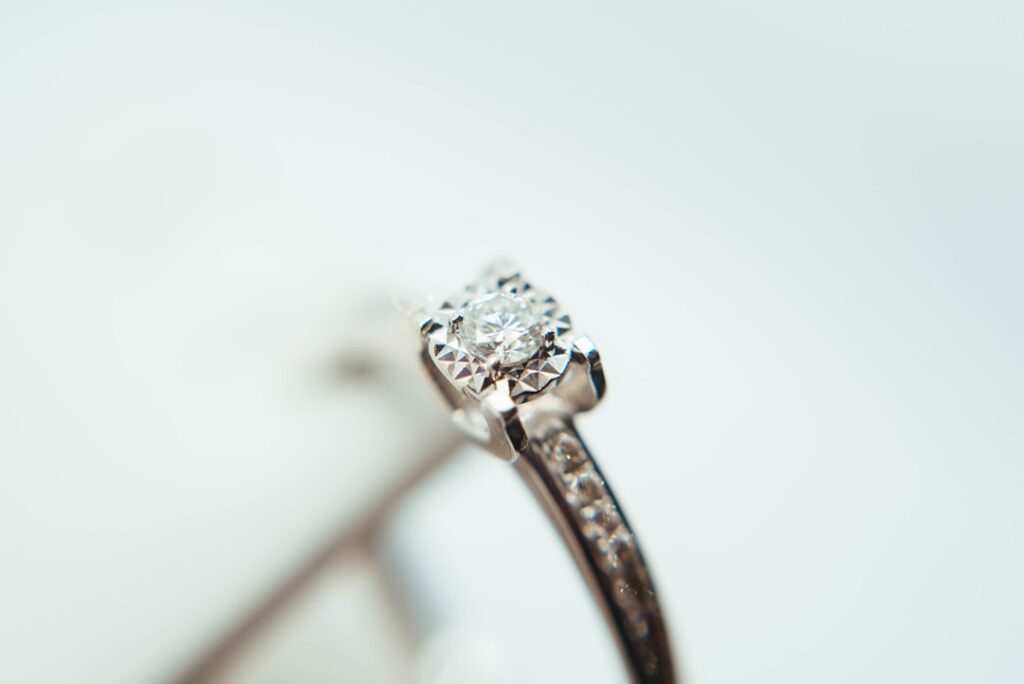 One of the biggest questions asked by divorcing couples is “who keeps the ring?” Engagement rings are typically one of the most expensive and sentimental gifts exchanged between spouses, so disputes often arise during a breakup or divorce over who should retain it. Whether a spouse may keep an engagement ring after the relationship ends depends on several factors, including the nature of the gift, whether there was a prenuptial agreement, and whether the couple ultimately married.
In both New Jersey and Pennsylvania, whether a spouse may keep the engagement ring largely depends on whether the marriage actually took place. Courts in both jurisdictions generally treat engagement rings as “conditional gifts.” The “condition” is the marriage itself. Once that condition is fulfilled (i.e., the couple marries), the gift becomes absolute.
This means that if one party gives an engagement ring and the couple follows through with the marriage, the recipient typically keeps the ring, even if the marriage later ends in divorce. The ring is not considered marital property subject to equitable distribution because it was given prior to the marriage, and the condition (marriage) was satisfied.
However, if the marriage never occurs, the condition is not met, and the ring must usually be returned to the giver. Courts in both states consistently apply this principle. In New Jersey, for example, this rule was clearly established in Aronow v. Silver, 233 N.J. Super. 344 (1989), where the court required the recipient to return the engagement ring after the engagement was broken. Pennsylvania courts follow the same general framework, focusing on whether the condition of marriage was fulfilled rather than the reasons for the breakup.
An added wrinkle arises when the engagement ring is a family heirloom. While courts in both New Jersey and Pennsylvania still apply the conditional gift doctrine, the sentimental and unique nature of heirloom rings can sometimes influence negotiations between the parties.
Courts are generally consistent in requiring return of the ring if the marriage does not occur, but once the marriage takes place, even heirloom rings are typically treated as the separate property of the recipient. Despite the emotional significance attached to these items, the legal analysis remains the same.
That said, parties may agree otherwise in a prenuptial or postnuptial agreement. If such an agreement specifies that a family heirloom must be returned in the event of divorce, courts will usually enforce that provision. These agreements can be especially important when a ring has significant generational or sentimental value.
If the couple does marry, both New Jersey and Pennsylvania treat the engagement ring as the separate, non-marital property of the recipient. The reasoning is that the gift was completed before the marriage and therefore is not subject to equitable distribution in a divorce.
This means that, in most divorce cases, the recipient spouse will keep the engagement ring, and it will not be divided as part of the marital estate. Courts in both jurisdictions apply this rule consistently, providing a predictable outcome in most cases.
However, limited exceptions may arise. For example, if the parties explicitly agree to treat the ring as marital property, or if its value becomes intertwined with marital assets, a different result could occur. These situations are relatively uncommon but highlight the importance of clear agreements and careful financial planning.
Although engagement ring disputes can feel highly personal, courts in both New Jersey and Pennsylvania apply a straightforward and consistent legal framework. The central question is whether the condition of marriage was satisfied.
Modern courts in both states generally apply a no-fault approach to this issue. Rather than examining which party ended the engagement or assigning blame, the focus remains on whether the marriage occurred. If it did, the recipient keeps the ring. If it did not, the ring is typically returned to the giver.
This approach promotes clarity and reduces the need for courts to become involved in the emotional details of a failed relationship. It also provides individuals with a clearer understanding of their rights and obligations.
Although engagement rings carry deep emotional value, courts in both New Jersey and Pennsylvania analyze them through a relatively straightforward legal framework. The key question is whether the condition of marriage was satisfied. If it was, the recipient keeps the ring. If not, the ring is typically returned.
Because these disputes can become highly personal and contentious, it is often beneficial for couples to address the issue proactively through prenuptial agreements or clear understandings. Doing so can help avoid uncertainty and reduce the likelihood of conflict.
Consulting with an experienced family law attorney can also help clarify your rights and provide guidance tailored to your specific circumstances, ensuring that you are well-informed during an already difficult time

Stark & Stark Recognized with Community Partner Award by Mercer County Community College Foundation
Stark & Stark is proud to announce that the firm has been recognized with the Community Partner Award by the Mercer County Community College...Carin A. O’Donnell, Esq. Inducted as 2026-2027 President of the Pennsylvania Association for Justice
Stark & Stark is proud to announce that Carin A. O'Donnell, Esq. was sworn in as the 2026-2027 President of the Pennsylvania Association for...Stark & Stark’s Thomas S. Onder, Esq. Receives 2026 ICSC Trustees’ Distinguished Service Award
Stark & Stark is proud to announce that Thomas S. Onder, Esq., Shareholder and Chair of the Firm’s Shopping Center & Retail Development...Our Values Remain: A Message on the Closing of Diversity Lab
Stark & Stark is saddened and disappointed to learn that Diversity Lab, the organization that created and manages the Mansfield Certification...Retail Development Team Secures Major Recovery for Landlord Client Amid Bankruptcy Dispute
Our Shopping Center and Retail Development Group recently secured a multi-million-dollar settlement for a commercial landlord client' s property...