Personal Injury Law Blog

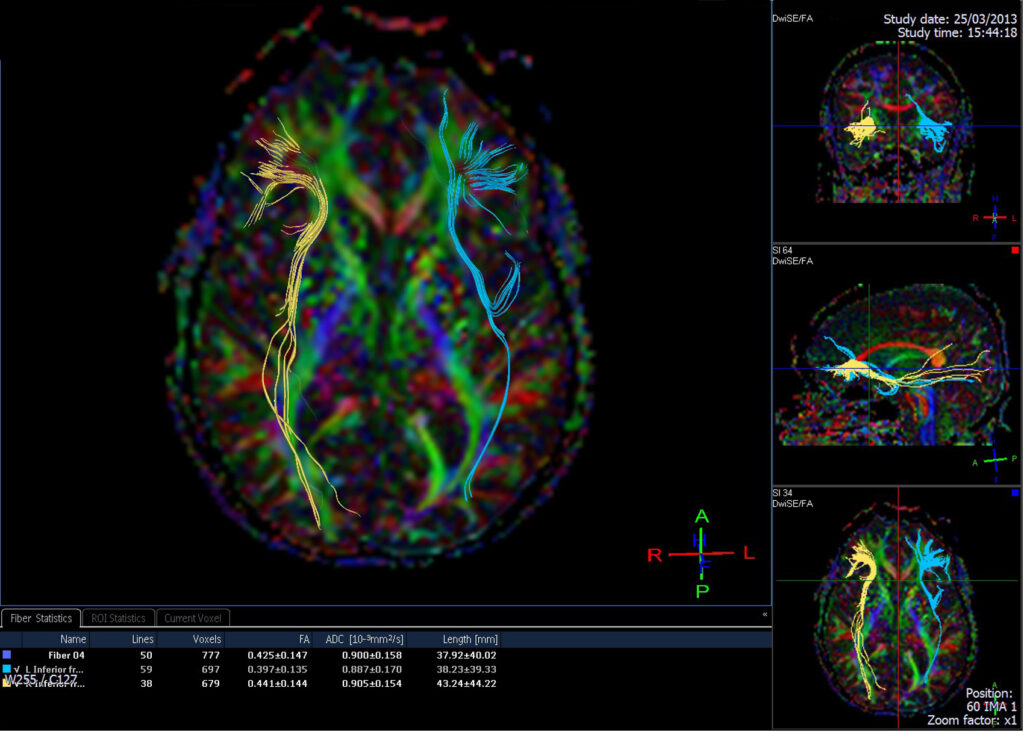
For years, concussions were described as temporary disruptions in brain function that could not be seen on any medical test. Patients were often told that because their CT scan or MRI was “normal,” nothing serious had happened. This outdated view has finally begun to change as advanced neuroimaging has shown what patients have always known: the brain can suffer very real injuries that routine imaging is incapable of detecting. One of the most important developments in this area is diffusion tensor imaging, commonly known as DTI.
A newly published systematic review brings together more than two dozen original research studies examining athletes with sport-related concussion. The collective findings reinforce what clinicians who treat traumatic brain injury have observed for years. Concussion causes microstructural injury to the brain’s white matter, and these injuries are measurable with DTI even when standard MRI appears normal.
In the acute phase after injury, DTI often reveals disrupted water movement within the brain’s fiber pathways. These changes reflect swelling, shearing forces, and early axonal damage. The direction of these abnormalities can vary from patient to patient, which is not surprising given the wide variation in concussion biomechanics. But in the chronic phase, the pattern is far more consistent. Reduced fractional anisotropy and increased mean diffusivity appear regularly in long-term studies and are closely associated with Wallerian degeneration, a hallmark of axonal loss. In plain terms, the injured fiber pathways begin to deteriorate, and DTI captures this process.
One of the most important conclusions of this review is that microstructural brain injury often persists long after symptoms appear to resolve. Several studies showed ongoing abnormalities at weeks, months, and even years post-concussion, underscoring why so many patients continue to report headaches, cognitive problems, mood symptoms, or balance difficulties despite being told they have “recovered.” Conventional imaging cannot explain these complaints, but DTI can.
The review also reveals that these imaging findings are not merely academic. Elevated diffusivity correlated with slower reaction time, impaired motor function, increased symptom severity, and delayed recovery. Reductions in anisotropy were linked to cognitive deficits and depressive symptoms. These associations validate the lived experience of patients whose persistent problems are routinely dismissed by insurers and defense experts.
Another notable theme is the cumulative effect of repeated head impacts. Even in athletes who never sustained a formally diagnosed concussion, repetitive exposures altered white matter integrity. In those with multiple concussions, the changes were even more pronounced. This confirms what countless clients describe: each concussion becomes harder to recover from, and the effects can compound over time.
DTI is not yet a universally adopted clinical tool, and the review acknowledges variability in study design and methodology. But the overarching message is unmistakable. DTI provides measurable, objective evidence of brain injury in concussion patients. It demonstrates that concussion is not simply a transient functional disturbance but a biological injury with structural consequences.
For patients and their families, this technology offers validation. For the medical community, it provides a pathway toward more accurate diagnosis and treatment planning. And for those of us representing the injured, DTI is another tool that helps ensure that invisible injuries are no longer ignored.
As research continues to evolve, DTI is poised to play an increasingly central role in understanding traumatic brain injury. The science is moving quickly, and the legal system must keep pace.
Patil, S., Kata, R., Aydin, S., Karabacak, M., Margetis, K., & Bisdas, S. (2025). Clinical utility of diffusion tensor imaging in sport-related concussion: a systematic review. BJR| Open, tzaf024.

Stark & Stark Recognized with Community Partner Award by Mercer County Community College Foundation
Stark & Stark is proud to announce that the firm has been recognized with the Community Partner Award by the Mercer County Community College...Carin A. O’Donnell, Esq. Inducted as 2026-2027 President of the Pennsylvania Association for Justice
Stark & Stark is proud to announce that Carin A. O'Donnell, Esq. was sworn in as the 2026-2027 President of the Pennsylvania Association for...Stark & Stark’s Thomas S. Onder, Esq. Receives 2026 ICSC Trustees’ Distinguished Service Award
Stark & Stark is proud to announce that Thomas S. Onder, Esq., Shareholder and Chair of the Firm’s Shopping Center & Retail Development...Our Values Remain: A Message on the Closing of Diversity Lab
Stark & Stark is saddened and disappointed to learn that Diversity Lab, the organization that created and manages the Mansfield Certification...Retail Development Team Secures Major Recovery for Landlord Client Amid Bankruptcy Dispute
Our Shopping Center and Retail Development Group recently secured a multi-million-dollar settlement for a commercial landlord client' s property...