Registered investment advisers are operating in an environment where SEC exams, enforcement priorities, and technology risks continue to evolve. At the recent Investment Adviser Association conference in Washington, DC, regulators emphasized cooperation and remediation, a renewed focus on fraud and market manipulation, and ongoing scrutiny of marketing and advertising practices.
Our Investment Management & Securities team helps RIAs translate those themes into practical steps. The conference highlighted several areas that should be on every adviser’s radar: avoiding “no conflicts of interest” claims on websites and marketing materials, carefully handling testimonials and third‑party ratings, and reviewing dual‑hatted adviser arrangements where brokerage and advisory services intersect.
The discussions also underscored the importance of cybersecurity programs, Reg SP incident response planning for smaller advisers, and thorough vendor due diligence for technology and AI tools that handle client data. Many firms are moving cybersecurity out of a short policy section and into a dedicated manual with its own processes, procedures, and data‑mapping expectations.
By staying ahead of these developments, RIAs can respond more effectively to exam findings, remediate issues, and align their policies, procedures, and disclosures with current expectations.
This podcast provides general legal information and commentary only. It is not intended as legal advice, nor does it create an attorney-client relationship. For more information about Stark & Stark’s services, please visit www.stark-stark.com.
Intro (00:01):
This is Advisor Intelligence, the podcast for investment advisors and financial institutions. In each episode, attorneys from your investment management and securities team break down compliance, regulation, and risk into practical insights that help you stay exam ready and ahead of what’s next. This podcast is brought to you by Stark & Stark.
Joseph Antonakakis, Esq. (00:29):
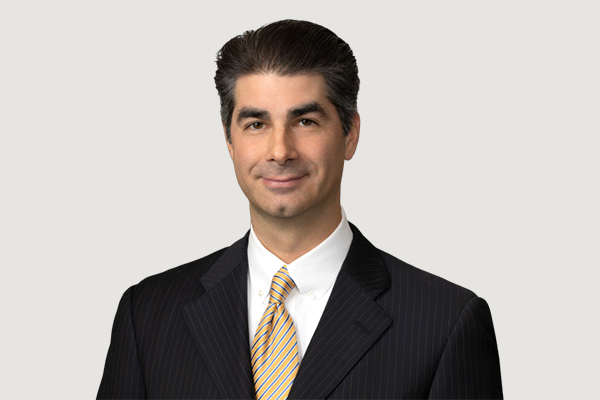
Hello and welcome back to Advisor Intelligence. My name is Joseph Antonakakis and I’m joined today by my colleagues, Jeffrey Lang and Steve Galletto. Today we’re talking about the IAA conference in Washington, DC, the Investment Advisor Association. It was one of the best conferences I’ve ever been to. We had a lot of fun networking with folks, advisors from all over the country who came not only to network with each other, but also to hear the regulators themselves speak. And they had a lot of really big names who came in and talked about various topics, whether it was enforcement or examinations or sort of the new, what we can call perhaps friendlier SEC and their stance towards advisors. They stressed this at the IAA conference, and in fact, I have a press release that they put out just about a month ago where they sort of talk about how they’re becoming friendlier.
(01:33):
And if you don’t mind, I’m going to read it word for word. From the SEC directly, Chairman Paul Atkins says, “Our goal has been to lead the division of enforcement back to Congress’s original intent, enforcing the federal securities laws, particularly as they relate to fraud and manipulation.” He continues, “I’m pleased to report significant progress towards this objective. The division reprioritized enforcing the nation’s securities laws with a focus on pursuing fraud.” They go on to say, “We redirected the division staff towards the type of misconduct that inflict the greatest harm, such as fraud, market manipulation, abuses of trust, and away from approaches that prioritize touting volume over impact.” And I think this is becoming a theme that we’re seeing throughout the SEC, something they’re discussing publicly in their press releases publicly at the IAA conference. And I think it’s just incredibly interesting to see how the pendulum has sort of swung away from an aggressive SEC looking to enforce seemingly minor violations of law to an SEC that’s more focused on the sort of what we can call big ticket fraud items instead.
Stephen Galletto, Esq. (02:48):
And in my head right now is that meme of Admiral Ackbar from Star Wars saying it’s a trap.
Joseph Antonakakis, Esq. (02:54):
It could be a
Stephen Galletto, Esq. (02:54):
Trap. It’s a trap.
Joseph Antonakakis, Esq. (02:55):
Why might it be a trap?
Stephen Galletto, Esq. (02:56):
Well, because the pendulum swings both ways, right? In extremes. Two years ago, they were finding firms hundreds of thousands of dollars for using third party accolades without proper disclosures. They were finding firms hundreds of thousands of dollars for failing to file a Form 13F without any warning or opportunity to correct the issue or to point out the issue. So if we’re looking at the warmer, friendlier neighborhood SEC, yeah, let’s see how long that lasts. I mean, we have to keep on being consistent with policies and procedures. We have to be mindful of the changing environment. Joe, you and I both listened to one of the directors of the SEC enforcement folks, and he was going on and on and about how AI is changing the industry. And I think spoiler alert, I think Joe even posed a question and the question was kind of brushed off, which to me is a little telling.
(04:02):
He was all in on the SEC embracing AI. And what I saw was a government agency looking at using AI to replace the folks that had recently been terminated. Remember, we’re dealing with a kinder, friendlier SEC. Maybe this is just a pitch. Maybe it has to be kinder and friendlier because they don’t have the staff to be as aggressive as they were two years ago.
Joseph Antonakakis, Esq. (04:26):
A kinder, friendlier SEC is not an excuse to take your foot off the gas. It’s not an excuse to say, “The SEC doesn’t care about minor violations anymore, so I’m not going to be as detail oriented with my policies and procedures or my website.” Because we still see these things coming up in deficiency letters. Now, again, it’s not going to enforcement necessarily or we’re not seeing people get fined as a result, but it’s showing up in deficiency letters and they are still looking at it. And like you said, just as easily as the pendulum can swing one way, it can swing another. And I want to take a moment because I know Jeff took some meticulous notes about some subjects that he heard about in various sessions.
Jeffrey Lang, Esq. (05:07):
So what I wanted to do is just throw out some items, not specifically related to each other, but the headlines that were tossed out during the SEC conversations about things that may be prioritized. And one of them does track with this whole notion of the slightly gentler exam approach where, as one of the folks speaking said, a theme is cooperation and remediation. So the idea being that you cooperate, remediate, fix things, enforcement opportunities are more likely if we come back and things haven’t been fixed. So cooperation and remediation were clearly a theme among the folks giving their talks. Going back to basics, they talked about refocusing on average investors, older investors, and what do these folks need for protection. Also, products that are sensitive to volatility goes in line with those folks. Is there protection around the types of products that people are being invested in?
(06:15):
M&A activity is on their watch list, as is how we use tech companies that maintain our client data. Due diligence, vendor reviews, looking at their privacy policies, that’s going to be a focus. AI was brought up in two contexts. Number one, AI will be a focus of … Advisor use of AI is going to be a focus of exams and of what we’re doing. Do we have the procedures, et cetera. However, the SEC is adopting the use of AI from an exam context to help do what it does. So there’s two sides to that coin. Reg SP readiness, as we might imagine, a very, very big focus dovetails with cybersecurity that we’re going to be talking about as well. Last thing they focused on was marketing. The marketing rule, the emphasis on the marketing rule and the exam context is still an important item, and making sure that you don’t take your foot off the gas with respect to getting your marketing material correct and in good order.
(07:16):
And also what they specifically mentioned was don’t say you have no conflicts of interest. So we see that from time to time.
Joseph Antonakakis, Esq. (07:24):
Absolutely. And that no conflicts of interest language, we see on a lot of firms’ websites, we do extensive website reviews of our client’s websites anytime we’re doing a mock audit or we’re assisting with marketing review, or maybe somebody has a new website. And people think, “Well, I’m a fiduciary, therefore I always have to act in the client’s best interest and therefore I have no conflicts of interest.” You know where I see it?
Stephen Galletto, Esq. (07:52):
I see it with the fee-only advisors. They conflate being a fiduciary that is a fee-only advisor, meaning they don’t receive any commissions with not having conflicts of interest. That’s right. I think that’s where the convision really lies. I’ve not seen a fee-based advisor, an advisor that charges an investment advisory fee, as well as having people associated with the firm who receive commission compensation ever say that they’re without conflict on their website or in their marketing pieces. So just be careful. If you are fee-based, it doesn’t mean that you are conflict-free. There’s an entirely different meaning there.
Joseph Antonakakis, Esq. (08:30):
Or even if you’re fee-only, it doesn’t mean you’re conflict-free. No.
Stephen Galletto, Esq. (08:33):
That’s what I meant.
Joseph Antonakakis, Esq. (08:34):
Yeah.
Stephen Galletto, Esq. (08:35):
If you’re fee-only, it doesn’t mean you are conflict-free.
Joseph Antonakakis, Esq. (08:39):
Yeah. And the SEC, as we heard, is actively looking for things like that. They find people a couple of years ago, specifically for sites that said-
Jeffrey Lang, Esq. (08:49):
Unbiased.
Joseph Antonakakis, Esq. (08:50):
We are unbiased. We give conflict-free advice.
Jeffrey Lang, Esq. (08:54):
And Steve, to your point you made a moment ago, they are also focusing on dual-hatted advisors who also are registered reps. So they are focused on how those folks are conducting business. Do you have a methodology for determining when somebody comes in the door, whether they should be a brokerage client or an advisory client? And that’s certainly something they’ll focus on going forward.
Joseph Antonakakis, Esq. (09:18):
Yeah. And the other thing that was really great about the conference I thought was meeting so many new people. And we had a booth there. And so it was a prime location as well. And we had a lot of people coming by shaking our hands, people we’ve known for years, people we were just meeting for the first time, and we had a survey up for questions and things that people wanted us to address on the podcast. And just a short list of things that they asked about, we can run through it very quickly. Artificial intelligence in the industry. First and foremost, I would say you can take a look at one of our recent podcasts was specifically about tech trends, including artificial intelligence. But like Jeff mentioned, a big part of artificial intelligence in this industry is due diligence, ensuring that you’re performing due diligence on the companies that you’re using, whether it’s an AI note taker or an AI chatbot or an AI CRM, because there’s all sorts of these types of entities that are coming out.
(10:20):
And so making sure that you’re performing that due diligence on those vendors, ensuring that client information is not being used to train models, is not being taken back or stored in any way by the company. Mergers and acquisitions was another subject, and I think we’re going to talk about that on a future episode. What are some issues as it relates to mergers and acquisitions that you’ve seen recently that you think
Jeffrey Lang, Esq. (10:44):
Can be applicable? Signability of agreements is one, certainly. Looking at it saying, is the purchasing firm, are the existing agreements going to be assigned over to the new firm, or are clients simply going to execute all new agreements with the new firm? It is something that needs to be addressed because there are certain rules around assignment and consent. So in the context of M&A, assignability is certainly a key component of that.
Joseph Antonakakis, Esq. (11:17):
The other thing people are asking about are, generally speaking, new and upcoming regulations. I think the newest thing that’s coming up for what the SEC characterizes as small advisors is the regulation SP incident response plan, which is something that we’re also going to talk about in a future episode. But that incident response plan is required to go into place for small advisors, firms that with under 1.5 billion in assets under management by June of this year of 2026. Correct.
Stephen Galletto, Esq. (11:48):
Yep.
Joseph Antonakakis, Esq. (11:48):
The other thing is marketing compliance. And Jeff, you touched on this as well. This was covered extensively during the conference and the SEC is still looking at marketing and advertising materials at websites, things that are going out to clients and the marketing rule is still a hot topic. A couple years ago, like we said, we saw fines in the hundreds of thousands of dollars for extremely minor violations of the marketing rule.
Stephen Galletto, Esq. (12:15):
That harmed nobody.
Joseph Antonakakis, Esq. (12:17):
Harmed, in our opinion, respectfully to the SEC, harmed nobody.
Stephen Galletto, Esq. (12:22):
Why respectfully?
Joseph Antonakakis, Esq. (12:23):
Oh, man.
Stephen Galletto, Esq. (12:24):
Why?
Joseph Antonakakis, Esq. (12:26):
I want to remain frank. I like
Stephen Galletto, Esq. (12:27):
To put
Joseph Antonakakis, Esq. (12:27):
Out positivity
Stephen Galletto, Esq. (12:28):
In the world. Good cap, bad cop? Got it.
Joseph Antonakakis, Esq. (12:30):
Kind of.
Stephen Galletto, Esq. (12:30):
Buddy Cop duo.
Joseph Antonakakis, Esq. (12:34):
Respectfully, we didn’t think it harmed anybody. And I think that’s what the SEC is going after now is those things that actually are causing harm, that are fraudulent, which is a good thing. And so the marketing rules, you got to keep up with it. You got to keep up with testimonials and endorsements, and especially third party ratings, rankings, and awards. That’s the one where we see folks get it wrong most often, where they’ll have an award that’s buried deeply somewhere on their website with no disclosure. The SEC uses Claude to find it because Claude looks at every page of the website and then they find you $60,000 or whatever because you don’t have disclosure.
Stephen Galletto, Esq. (13:12):
Because they didn’t like the disclosure.You might even have disclosure, but you didn’t put it just the right way or use it every time you’re referencing that third party accolade in the marketing piece. Or again, this was the SEC from two years ago where they were looking for every little thing and finding you for every little thing. Hopefully the kinder, gentler SEC will point out these issues as a deficiency rather than refer you to enforcement or threaten you with an enforcement and offer you a settlement agreement instead. We’ll see where it goes, but until we see otherwise, we need to treat all of these marketing issues as paramount.
Joseph Antonakakis, Esq. (14:01):
Absolutely. And the last thing folks wanted us to talk about was technology compliance. This goes back a little bit with the AI aspect, but again, vendor due diligence of any technology platform is critical for registered investment advisors.
Stephen Galletto, Esq. (14:17):
Right. I mean, it’s a matter of what do we have in place from a nuts and bolts cybersecurity perspective, right? What kind of hardware do we have? Who’s our software vendor? Is it consistent with what a like- sized investment advisory firm, because again, this was one of the things the SEC also brought up over there at the conference, that they’re looking more at what is reasonable for an advisor with the limited resources that they have to actually put in place. So again, if you’re a $25 billion an AUM firm, they’re going to expect more thought and more state-of-the-art level technology and compliance versus a firm with 150 million in assets under management and you’re relatively low risk. If you’re a low risk firm, maybe your technology needs to be serviceable. If you’re a high risk firm, maybe you need to take additional steps, go through penetration testing and things along those lines.
Joseph Antonakakis, Esq. (15:18):
Before we wrap up, I have one question to ask you, and that question is, what do you think every advisor should do in the next 90 days?
Stephen Galletto, Esq. (15:29):
I think they need to review their policies and procedures, make sure it’s up to date. I think this is a good time of year to do it. Getting past the tax deadline, easing into the summer, but before you’re really taking on those summer Fridays and maybe we’re a little bit less staffed in the office, looking through the policies and procedures, determining whether or not you have the Reg SP section in place, whether or not you have taken the right steps to adjust for changes within the firm.
Jeffrey Lang, Esq. (16:02):
I’ll just add to that on that theme of policy and procedure, with the giant focus on cybersecurity and also data mapping, which is part of cybersecurity, consider that cybersecurity is now something that’s just more than just a page and a half in a regular manual. Cybersecurity is really now its own separate manual, its own separate set of processes and procedures, and consider that when you’re evaluating your program. Am I putting enough emphasis on cybersecurity as its own major topic with its own specific program needs?
Joseph Antonakakis, Esq. (16:44):
I agree. The thing that I would say is specifically related to artificial intelligence because a lot of firms are using it. A lot of firms may have employees who are using it and the CCO has no idea. The policy may be no AI use permitted, but the reality might be that folks are using a Claude or a Teams note taker or something along those lines. Or
Stephen Galletto, Esq. (17:08):
Relying on Gemini just by Googling.
Joseph Antonakakis, Esq. (17:09):
Or relying on Gemini’s Google feature or Google’s Gemini feature. Do an audit. If you’re a chief compliance officer listening to this, perform an audit of your firm’s AI use and ensure that you have a policy in place that outlines appropriate use of artificial intelligence tools, what tools are permitted, what tools are not, and how you ensure that client privacy and confidentiality is
Stephen Galletto, Esq. (17:38):
Maintained. I definitely think the AI frontier is going to continue to dominate compliance in 2027 next year. So it’s going to continue to develop. You’re going to have to continue to determine what level of acceptance the firm wants to take with the AI features. How can it benefit you? Do you have a proper policy in place to limit it? And just being mindful of how the SEC starts viewing these things.
Joseph Antonakakis, Esq. (18:06):
Yep. Steve, Jeff, thanks so much for your valuable insights today. And to the IAA, to Gail, to Alex, to all the great folks that we met at the conference, it was a fantastic time. We look forward to attending again next year and to everyone who attended, we’re here to help if you have any questions.
Intro (18:30):
The Advisor Intelligence Podcast provides general information and commentary only. The content is not legal advice, nor does it create an attorney-client relationship. For more information about Stark & Stark services, please visit our website at stark-stark.com.
Stark & Stark Recognized with Community Partner Award by Mercer County Community College Foundation
Stark & Stark is proud to announce that the firm has been recognized with the Community Partner Award by the Mercer County Community College...Carin A. O’Donnell, Esq. Inducted as 2026-2027 President of the Pennsylvania Association for Justice
Stark & Stark is proud to announce that Carin A. O'Donnell, Esq. was sworn in as the 2026-2027 President of the Pennsylvania Association for...Stark & Stark’s Thomas S. Onder, Esq. Receives 2026 ICSC Trustees’ Distinguished Service Award
Stark & Stark is proud to announce that Thomas S. Onder, Esq., Shareholder and Chair of the Firm’s Shopping Center & Retail Development...Our Values Remain: A Message on the Closing of Diversity Lab
Stark & Stark is saddened and disappointed to learn that Diversity Lab, the organization that created and manages the Mansfield Certification...Retail Development Team Secures Major Recovery for Landlord Client Amid Bankruptcy Dispute
Our Shopping Center and Retail Development Group recently secured a multi-million-dollar settlement for a commercial landlord client' s property...